




Why Learning About AI Is Worth It in 2026: Features and Real-World Applications
Introduction
- What is Artificial Intelligence (AI)?
- Why AI is becoming important in everyday life?
- Purpose of the blog (features, applications, and importance of learning AI)
AI stands for Artificial Intelligence. It is called artificial because it has been developed by humans for their own purposes. AI is designed and developed to easily complete even the most complex tasks, to reason, think, and make decisions.
Artificial Intelligence (AI) is no longer just a futuristic concept—it is already part of our daily lives. From voice assistants like Siri and Alexa to recommendation systems on YouTube and Netflix, AI is working silently behind the scenes. As technology continues to grow, learning about AI has become more valuable than ever. In this blog, we will explore why learning AI is worth it, understand its important features, and see how it is applied in real-world situations also to generate earning opportunities—all explained in simple terms for beginners.
AI is the name given to a capability through which many problems are solved. It is called AI because it is not natural, unlike humans, and our way of thinking is completely different. Humans have a unique ability; for example, if we need to give a precise answer to a question, our brain will first process it, gather all the relevant information it has, and then formulate an answer. Whether the answer is correct or incorrect depends on the information stored in our brain. The speed at which humans answer can be very slow or very fast, depending, as I mentioned earlier, on our individual capabilities.
Why AI is important today
AI is fast, simple, and works like a smart assistant. It makes you feel as if you have a super-intelligent employee who helps you complete tasks in very little time.
Today, AI has become a vital part of our lives for several important reasons:
- AI helps solve problems in areas such as medical diagnostics, weather monitoring, and more.
- It is widely used in customer support, digital marketing, website development, and software development.
- AI can answer questions and guide users in both professional and personal matters.
- Decision-making has improved with AI through accurate data analysis.
- AI’s automation features make complex tasks easier and faster.
In this blog you will get to know its features, importance of learning AI, AI applications and earning opportunities.
What Is Artificial Intelligence?
The term ‘Artificial’ means not natural and ‘Intelligence’ means capacity and capability to understand, learn, make decisions and solve complex problems, reason, to process information and many more.
When you combine both Artificial and Intelligence then it becomes a simulation of human Intelligence and a system which has been made not only to solve problem arises in daily routine and but to understand and solve complex problems of real world. It gives fast and accurate results.
Today AI is being used in almost every sector like in defence, medical, education and learning, industries and more.
How Does AI Actually Work?
AI works by finding patterns in huge amounts of data. It uses special algorithms that help computers learn from data and make predictions or perform tasks that once required human intelligence, such as recognizing images, understanding languages, and processing text.
DIY (Do It Yourself) Example
Imagine you write a few sentences on paper. You take a photo of it and upload it to an AI tool like ChatGPT. The AI can recognize the text written on the paper and convert it into digital text on your computer. This means you no longer need to type everything manually once you use AI.
AI can also check your writing for grammatical errors and suggest improved versions of the same content in different styles or tones, making your work faster and better.
AI works in the following manner:
- Collect Data in huge amount (for example, picture of an elephant)
- Train itself through feeding data into an algorithm (like a neural network)
- After learning it makes decision that (for example, “its an elephant!).
It becomes more accurate through feedbacks and improve itself.
Let's start using popular AI tool known as chatgpt step by step
There are so many AI tools available on the internet to make things easy. Some of them are premium tools and some are free to use. Today we’ll use free version of AI known as chatgpt.
Step no.1
Go to google search or simply type chatgpt.com in the web browser.
Step no.2
Here you first need to either login if you already have an account on chatgpt.com or you simply signup or press on continue with google button if you already have an account on google.com. After successfully login chatgpt main screen will appear where you can start using chatgpt.
Step no.3
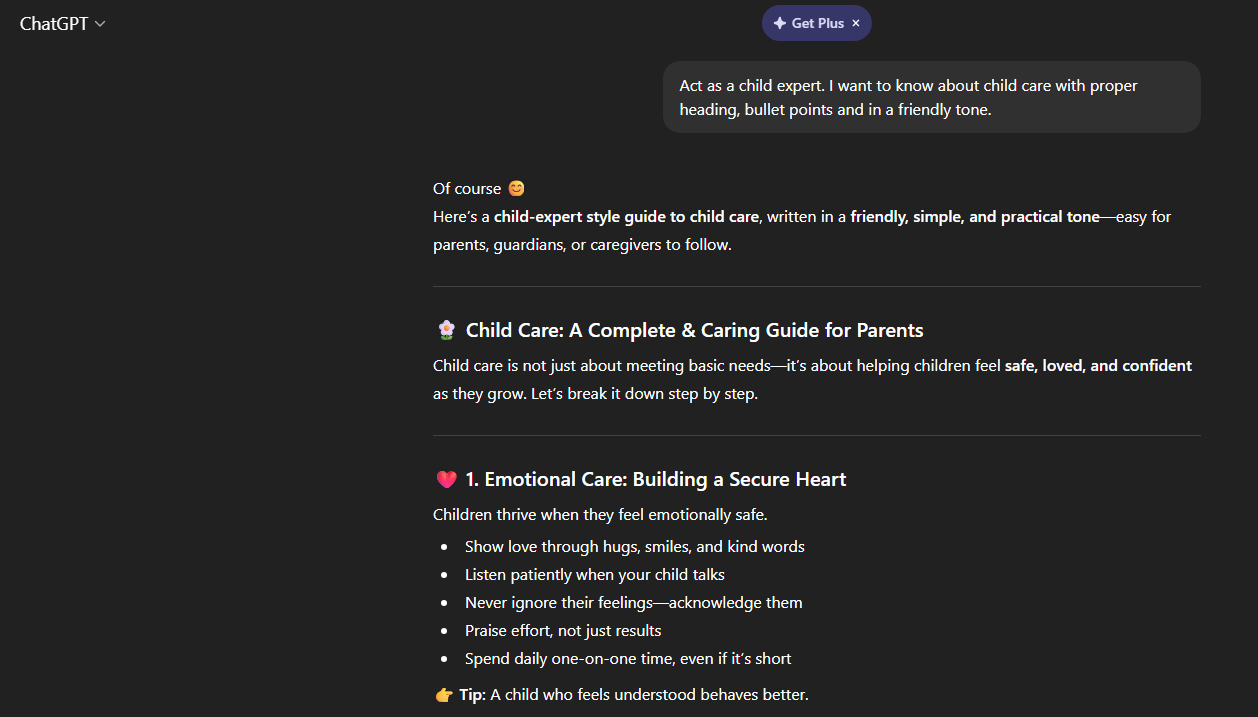
Chatgpt or any other AI tool you might be using to get you work done you would be agree with me that as question you ask to AI you will get the answer in that way. So here its crucial that how you take help from AI.
AI actually take prompts from the user and then act accordingly.
Here some prompt examples are given below :
- Use this structure whenever possible, ( Act as [ role ] + Task + Context + Output Format + Tone ) example : ” Act as a child expert. I want to know about child care with proper heading and bullet points in a friendly tone.” – source chatgpt.com
Why learning about AI is worth it?
- High demand for AI skills
- AI adoption across industries
- Carrier growth and flexibility
- AI for non technical users
Today AI skilled workers are high in demand because AI automate tasks, boost productivity. Professionals who can build , manage and apply complex systems.
Learning about Artificial Intelligence (AI) is worth it because AI is becoming a part of almost every industry and everyday activity. From smartphones and social media to healthcare and education, AI is helping people work faster, smarter, and more efficiently.
AI skills are in high demand today. Companies are looking for people who understand how AI tools work, even if they are not programmers. Knowing AI can open doors to new job opportunities, freelancing work, and online income sources.
Another reason to learn AI is future safety. As technology grows, jobs that use AI will grow, while those that ignore it may become outdated. Learning AI now helps you stay relevant and confident in the digital world.
In short, learning about AI is not only for engineers or scientists. It is useful for students, professionals, bloggers, business owners, and anyone who wants to grow in today’s technology-driven world.
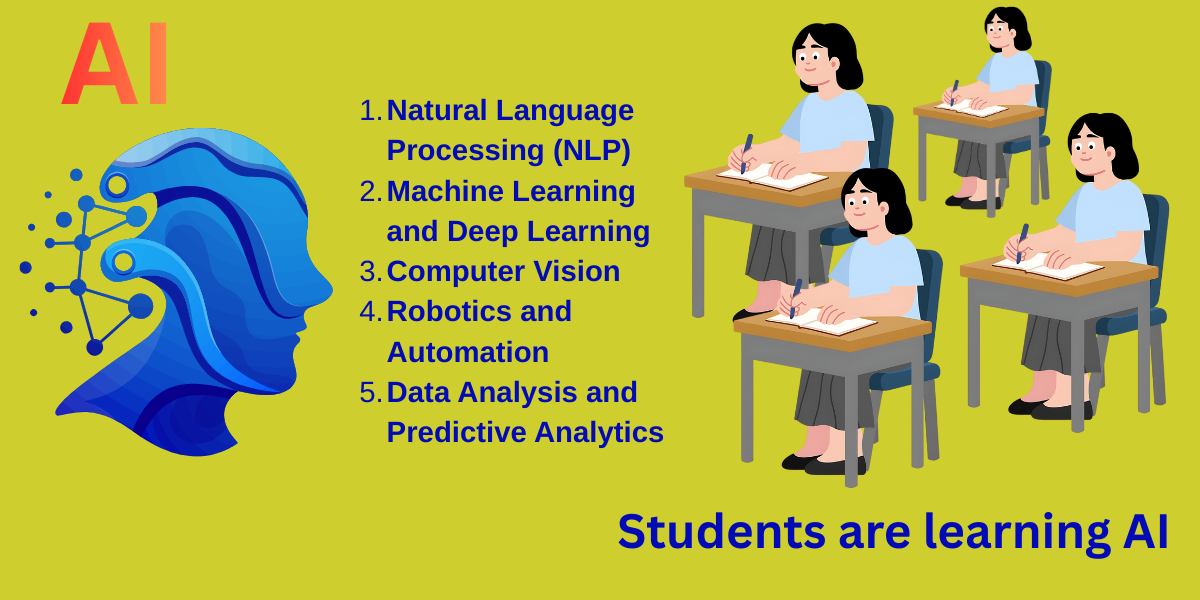
Key Features of Artificial Intelligence
1. Machine Learning
Machine Learning enables AI systems to learn from data without being explicitly programmed. The more data AI receives, the better it becomes at predicting results. Examples include product recommendations on shopping websites and video suggestions on YouTube.
2. Natural Language Processing (NLP)
Natural Language Processing (NLP) is a field of Artificial Intelligence (AI) that focuses on enabling computers to understand, analyze, and generate human language in a meaningful way. It bridges the gap between how humans communicate and how machines process data.
NLP allows machines to:
Understand text and speech
Extract important information
Analyze emotions or intent
Generate human-like responses
It combines computer science, linguistics, and machine learning to perform tasks such as language translation, chatbots, speech recognition, text summarization, and spam detection.
In simple words, NLP helps machines talk to humans in a natural and useful way.
3. Computer Vision
Computer Vision helps AI recognize and understand images and videos. It is used in face recognition, object detection, medical image analysis, and image search applications.
4. Automation
AI can automate repetitive and time-consuming tasks. This reduces human effort and increases productivity. Automation is widely used in customer support, manufacturing, and data processing.
5. Data Analysis and Decision Making
AI analyzes large amounts of data quickly and accurately. Based on this analysis, it helps in making better and faster decisions, especially in business, finance, and healthcare.
6. Self learning and improvement
AI systems can improve their performance over time by learning from experience. This makes them more accurate and efficient as they process more data.
Real-World Applications of AI in daily life
1. Smartphones, smart assistants
You might have asked questions on google assistant though your voice on your smart phone and you got the answer right away by google assistant. It so happened because of AI where google assistant recognizes your voice, analyze your query, search for result and repond accordingly.
It is being popular not just among elders and professionals but also among kids.
- Kids started playing with AI over smart phone.
- Giving voice commands to alexa and getting answers which amazed them.
- Although it is good that they are learning like this still parents should keep an eye on their kids.
Over dependence on AI may not be suitable for the development of brain of kids.
2.Social media algorithms
You often realized while watching videos on youtube.com or watching reals on facebook, instagram that you get the similar kind of reels you watched earlier this happens because of social media algorithms.
Social media algorithms are the set of rules and calculations used by platforms like facebook, intagram, twitter and more. There millions of contents uploaded on these platforms everyday and showing everything to the user is not possible.
So though algorithms and set of rule AI analyzed the content being watched by the user and serve them the similar contents to them.
For example : I watched reel on cricket match once or twice then it may be possible that I get same kind of content after every one or two reels.
Why Social Media Algorithms Are Important
- They help users see content that matches their interests
- They keep users engaged on the platform for longer
- They help creators reach the right audience
- They help advertisers to reach the right customer
In simple words, social media algorithms decide what you see, when you see it, and how often you see it.
3. AI in Healthcare
1. Disease detection
AI detects diseases by analyzing large amounts of medical data and finding patterns that are difficult for humans to notice. It learns from past data such as medical images, test reports, symptoms, and patient history.
2. Medical imaging and diagnostics
Medical imaging and diagnostics is one of the most important areas where AI is used in healthcare. AI helps doctors analyze medical images such as X-rays, CT scans, MRIs, and ultrasound images more quickly and accurately.
AI systems are trained using thousands of medical images. By learning patterns from these images, AI can detect abnormalities like tumors, fractures, infections, or organ damage that might be difficult to identify with the human eye. This helps in early disease detection and faster diagnosis.
AI also reduces the workload of doctors by highlighting suspicious areas in images, allowing them to focus on critical cases. However, AI does not replace doctors—it supports medical professionals in making better and more informed decisions.
3. AI in Education
Artificial Intelligence is transforming the education system by making learning more personalized, interactive, and effective. AI helps students learn at their own pace and supports teachers in managing academic tasks more efficiently.
AI-powered tools can analyze a student’s learning behavior and performance to provide personalized study plans and recommendations. This helps students understand difficult topics better and improve their results.
In online education, AI is used in virtual tutors and chatbots that can answer students’ questions instantly, even outside classroom hours. AI also helps teachers by automating tasks such as grading exams, checking assignments, and tracking student progress.
Additionally, AI supports language learning through speech recognition and translation tools, making education accessible to learners from different backgrounds.
4. AI in Business & Marketing
Artificial Intelligence plays a major role in modern business and marketing by helping companies understand customers and improve their strategies. AI analyzes customer data such as browsing behavior, purchase history, and preferences to create personalized marketing campaigns.
In marketing, AI is widely used for targeted advertisements, email marketing, and content recommendations. This helps businesses reach the right audience at the right time, increasing engagement and sales.
AI-powered chatbots are used in customer support to answer questions instantly, provide product information, and handle basic queries 24/7. This improves customer experience and reduces operational costs.
AI also helps businesses predict market trends, analyze sales performance, and make better decisions using data insights. From small startups to large companies, AI makes business operations faster, smarter, and more efficient.
4. AI in Content Creation
Artificial Intelligence has changed the way digital content is created. AI tools help writers, designers, and creators produce high-quality content faster and more efficiently. From writing articles to creating images and videos, AI supports almost every stage of content creation.
In writing, AI tools can help generate ideas, improve grammar, rewrite content in different tones, and optimize text for SEO. This is especially helpful for bloggers, marketers, and students who want to save time while maintaining quality.
AI is also used in image and video creation. It can generate images from text, edit videos, add subtitles, create voiceovers, and even suggest music. These features help content creators produce professional-looking content without advanced technical skills.
Who Should Learn AI?
• Students and freshers : For students and freshers, learning AI builds problem-solving skills, improves job opportunities, and gives a strong career advantage. Even basic AI knowledge helps you work smarter, stay relevant in a competitive job market, and prepare for future-ready roles.
• Working professionals : Artificial Intelligence helps working professionals automate routine tasks, make better decisions using data, and stay competitive in a fast-changing job market. Learning AI improves productivity, opens doors to higher-paying roles, and ensures long-term career growth by upgrading skills that are in high demand across industries.
• Bloggers and content creators : AI helps bloggers and content writers research faster, generate content ideas, improve SEO, and optimize writing for better reach and engagement. Learning AI saves time, boosts creativity, and helps creators stay consistent, competitive, and relevant in the evolving digital content world.
• Business owners and freelancers : AI helps business owners and freelancers automate daily tasks, understand customers better, and make data-driven decisions. Learning AI improves productivity, reduces costs, enhances marketing efforts, and gives a competitive edge in scaling businesses and delivering smarter services.
Is AI Hard to Learn?
• Common myths about AI learning :
AI is only for programmers
AI will replace all jobs
AI is too difficult to learn
You must be a math expert
AI is only for tech professionals
• Beginner-friendly tools and platforms :
ChatGPT – Writing, ideas, summaries, and learning AI basics
Canva AI – Easy design, posts, presentations with AI help
Grammarly – Improve writing clarity and grammar
Google Gemini – Research, content, and smart assistance
Teachable Machine – Learn AI concepts without coding
• Importance of starting with basics : Learning AI from the basics builds a strong foundation, makes concepts easier to understand, and prevents confusion later. Strong basics help beginners learn faster, apply knowledge correctly, and grow confidently with advanced AI skills.
Advantages and Challenges of AI
Advantages
• Saves time and effort : AI automates repetitive tasks, speeds up work, and reduces manual effort. This helps people work smarter, stay productive, and focus on more important and creative tasks.
• Improves accuracy and productivity : AI reduces human errors and handles tasks faster with consistent results. This increases work accuracy, boosts productivity, and helps achieve better outcomes in less time.
AI works by finding patterns in huge amounts of data. It uses special algorithms that help computers learn from data and make predictions or perform tasks that once required human intelligence, such as recognizing images, understanding languages, and processing text.
Challenges
• Job concerns : Many people fear AI will replace jobs, but in reality it changes job roles. Learning AI helps individuals stay relevant, adapt to new opportunities, and work alongside technology instead of being replaced.
• Ethical and privacy issues : AI can raise concerns about data privacy, bias, and misuse of information. Understanding ethical AI helps ensure responsible use, protects user data, and builds trust in technology.
Conclusion
Artificial Intelligence has become an important part of our daily lives, influencing education, healthcare, business, and content creation. It helps people work faster, make smarter decisions, and solve complex problems.
Learning about AI is worth it because it creates new opportunities, improves productivity, and prepares us for the future. AI is not limited to experts—anyone can start learning and benefit from it. Understanding AI today can help you stay relevant and confident in the rapidly changing digital world.
Frequently Asked Questions (FAQs)
1. What is Artificial Intelligence (AI) in simple words?
Artificial Intelligence is a technology that allows machines and computers to think, learn, and make decisions like humans. AI systems learn from data and improve their performance over time.
2. Why is learning AI important today?
Learning AI is important because it is used in almost every field, such as education, healthcare, business, and marketing. AI skills help people work faster, stay updated with technology, and improve career opportunities.
3. Do I need coding skills to learn AI?
No, coding is not always required. Many AI tools are designed for beginners and non-technical users. However, learning basic programming can be helpful if you want to go deeper into AI development.
4. Can beginners earn money using AI?
Yes, beginners can earn money using AI by creating content, freelancing, blogging, social media management, and using AI tools for productivity. Many AI tools do not require advanced technical knowledge.
5. How is AI used in daily life?
AI is used in smartphones, voice assistants, social media recommendations, online shopping, navigation apps, and customer support chatbots. Most people use AI daily without even realizing it.
6. Is AI difficult to learn?
AI is not difficult to learn if you start with the basics. Many beginner-friendly courses, videos, and tools are available. With regular practice, anyone can understand AI concepts.
7. How does AI help in healthcare?
AI helps in healthcare by analyzing medical images, detecting diseases early, monitoring patient data, and assisting doctors in diagnosis. AI improves accuracy and saves time but does not replace doctors.
8. Is AI safe to use?
Yes, AI is safe when used responsibly. Like any technology, it should be used ethically and with proper guidelines to protect data privacy and security.
9. What is the future of AI?
The future of AI is very promising. AI will continue to grow in areas like automation, smart devices, education, and business. Learning AI now can help people stay future-ready.
10. Who should learn AI?
AI can be learned by students, professionals, bloggers, business owners, freelancers, and anyone interested in technology. AI is useful for both technical and non-technical users.
Over to You! ❤️
“I really appreciate you taking the time to read this blog. Your thoughts and feedback mean a lot to me, so I’d love to know your opinion in the comments!”
Drop your thoughts in the comments.
Share this post with your tech-loving friends.
Follow us for more future tech insights.
